Mark Edward Harris: Inside Iran

Photo © Mark Edward Harris-All Rights Reserved

Iran has been grossly maligned for political reasons by the current administration, and most Americans know it as a member of the ridiculous "Axis of Evil" moniker used by Bush. The book Inside Iran by Mark Edward Harris may redress this view.

In 1986 Mark Edward Harris set off on a four-month trek across the Pacific and throughout Southeast Asia, China and Japan. The images created on that trip brought attention to his travel/documentary photography. He since has visited and photographed in over 60 countries. His editorial work has appeared in publications including Life, Stern, GEO, Conde Nast Traveler, Islands, Spa, Playboy, Harper's Bazaar, Vogue, Elle, American Photo, The New York Times, The London Times, The Los Angeles Times Sunday Magazine as well as many in-flight magazines.

The above photograph of an elderly couple in presumably rural Iran is just wonderful.


Interview
with Mark with an Iranian TV website on the book Inside Iran.

Eric de Vries: Cham Muslims of Cambodia


Khmer Islam is an audio slideshow produced by photographer Eric de Vries of the Khmer Islam, known as the Cham Muslims. These are members of an ethnic group in villages near the Mekong and Tonle Sap river in Cambodia. Most Chams in Cambodia are involved in fishing and agriculture.

Eric photographed the series at the Islam Spiritual Center, Russei Chrouy village, Masjid-Alrahmani mosque north of Phnom Penh, at the Masjid Thom Dubai mosque on the borders of Boeung Kak lake and at the Nurunnaim Mosque and Chrang Chamreh village on National Road 5.

Eric de Vries lives in Phnom Penh, Cambodia, where he's been traveling since 2000, and TTP has featured his work on a previous post.

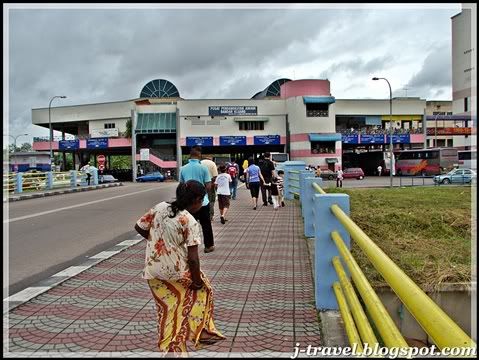
Kluang Bus Terminal, Johor

Bye bye to Fire Station, we continue our walking to Kluang Bus Terminal (N2°02.165' E103°19.351'). We passed through many shops along the street and seems like most of them are selling shoes. It's looks like a Shoe street to me....
The street named 'Jalan Dato Tan Seng Leong'.

Ops! (Kluang Bus Terminal after this bridge)

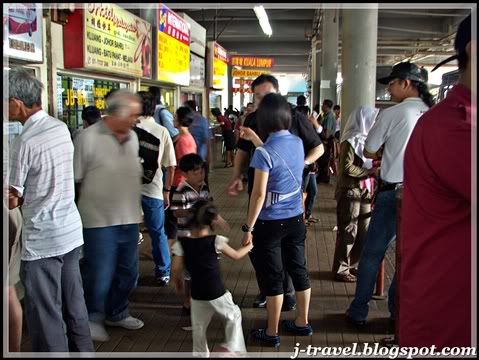
The Bus Terminal is no different with other....Busy, noisy, smokes everywhere....Taxi Terminal was just beside...
There were Plenty of Express Bus from Kluang to Johor Bahru, and the timings are every 30 minutes one bus (Might same schedule from JB to Kluang). So we can choose our comfort time for the ticket, finally we confirmed on 2.30pm and the Bus ticket was MYR9.00 per adult. Cheaper than train, comfort? No idea yet...


They were busy discussed on the Bus tickets, I'm busy taking photos...

There is a food court on the First floor, culture of Malaysia Bus Terminal.

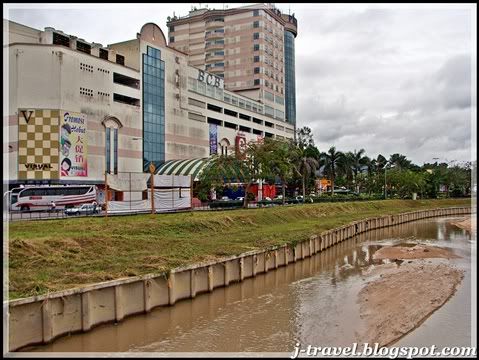
Once we settled the tickets, we walked into the Shopping Complex beside, The BCB Plaza (N2°02.116' E103°19.376').
Nothing much, just another shopping complex. The Store is the Anchor Tenant.

The building after the BCB Plaza is Prime City Hotel of Kluang.

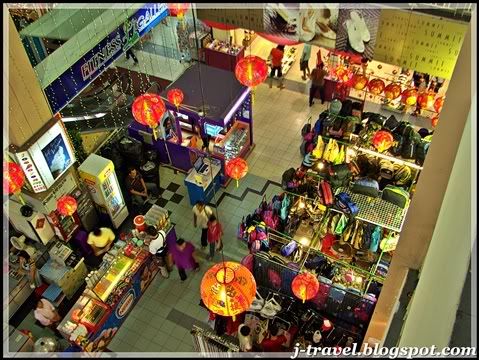
Not much of CNY decoration...

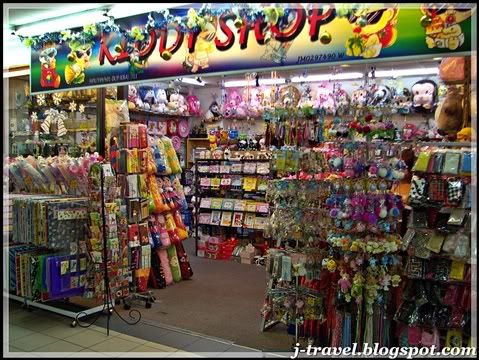
But I noticed, there were many shops selling same product like the picture below...

After the walk, we felt hungry again?! Oh! Goodness! It's so easy to get hungry by walking...
So we proceed to taste the Famous Roasted Pork of Kluang.

Kluang Day Trip 4th JAN 2009 :-
*
Kempas Railway Station (KTM), Johor Bahru

* Kluang Railway Station Coffee, Johor
* Kluang Fire Department, Johor.
* Kluang Bus Terminal, Johor
* Sam Kee BBQ Place, Kluang - Johor


MY TRIPS - Home

Shawn Baldwin: Egypt

Photo © Shawn Baldwin-All Rights Reserved

Shawn Baldwin is a photographer based in Cairo, Egypt, whose work regularly appear in The New York Times. For the past 10 years he covered major news events in the U.S., Europe, Asia, Africa and the Middle East including the war in Iraq.

His work was recently been exhibited in New York and was published in most major publications including Time, Newsweek, US News, the Guardian and Le Monde. In addition to editorial work, corporate assignments included J.P. Morgan Chase, Goldman Sachs, HSBC and Nike.

Shawn's galleries are predominantly of the Middle East; Egypt (which I feature here), Iraq, Dubai, Saudi Arabia, Eritrea and Algeria. His Egypt gallery is varied, with photographs of mass weddings to political rallies. His photograph of the sugar cane juice being poured by an anonymous hand and the expectant look on the young girl's face framed by the tap is a lovely story-telling composition.

I also featured Shawn's work on Cairo with the New York Times in a previous TTP post.

NYT: The Girls of Mirwais School

Image © Danfung Dennis/NYT-All Rights Reserved

"Then the man pulled Shamsia’s burqa from her head and sprayed her face with burning acid. Scars, jagged and discolored, now spread across Shamsia’s eyelids and most of her left cheek. These days, her vision goes blurry, making it hard for her to read."

The New York Times features Danfung Dennis' photographs in a slideshow The Resilience of Kandahar. We all remember how 11 young Afghan schoolgirls were injured last November when they were sprayed with acid by men who were enraged by their attending school. An accompanying article by Dexter Flikins is worth reading, and provides context to the slideshow.

It's a testament to these 11 young schoolgirls' courage and resilience that nearly all of them are back at the Mirwais School for Girls. Almost all the 1300 female students in this deeply conservative community of Kandahar have returned as well.

Shamsia, one of the girls who was badly disfigured in the attack, is quoted as saying:" “The people who did this, do not feel the pain of others.” By the way, the name of this brave girl means 'sunshine', and she's the one on the right of the picture above..

If Afghanistan ever returns to be a country where these atrocities no longer occur, it'll be because of Shamsia and her ilk...not because of the corrupt governance of Hamid Karzai and his entourage.

Kluang Fire Department, Johor.

Kluang Fire Station (N2°02.033' E103°19.178')
While we walked towards the Kluang Bus Terminal for Express Bus tickets, we passed by this Fire Station which located at the junction of Jalan Sultanah and Jalan Haji Manan.

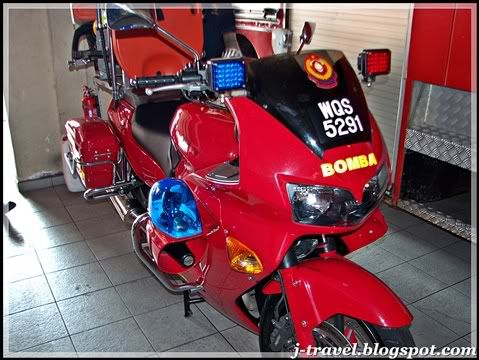
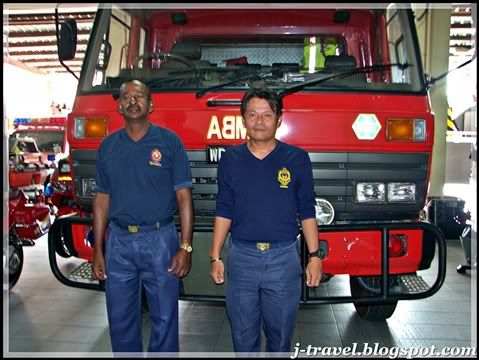
Me and Kenny just walk in to take some photos, suddenly alert two fireman from the station and walk toward the gate. We thought, we will be chase out by these two firemans....but unexpectedly, they are so friendly and invite us to walk around the Fire Station, even to be our Tour Guide! We were surprised! (Our first impression for Kluang peoples)

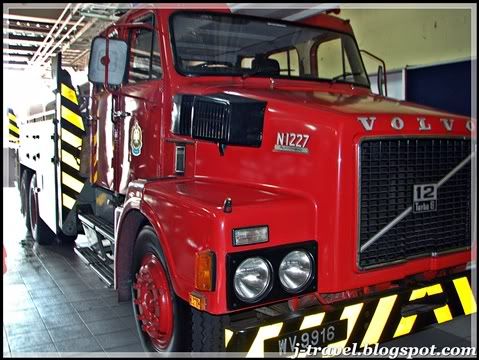
They explained everything within the station, and kind enough to let us go into the trucks.


Inside the Truck.

Life saver.

One of the classic Fire Engine...

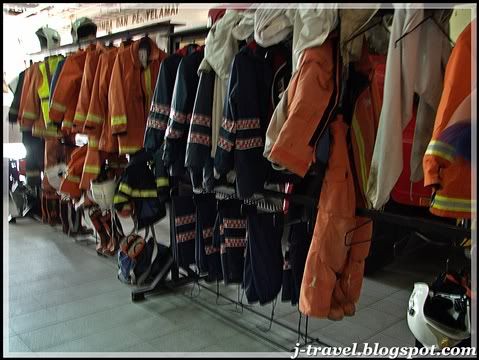
The suits...

They even show us the Control Room, and elaborate about their operations...but we cannot enter...

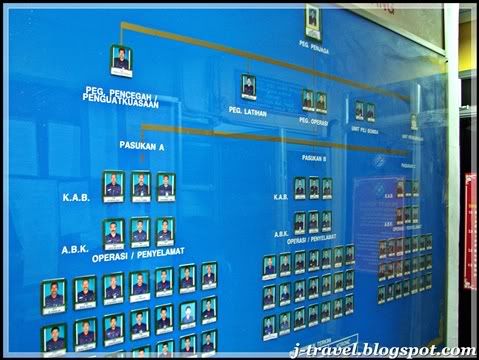
Their organization chart.

I respect them because they are the Hero of the peoples! They save life in every operations!

Our 'Tour Guide'. Salute!!

We continue our walk to the Bus Terminal after the warm welcome from the Kluang Fire Department...

Kluang Day Trip 4th JAN 2009 :-
*
Kempas Railway Station (KTM), Johor Bahru

* Kluang Railway Station Coffee, Johor
* Kluang Bus Terminal, Johor
* Sam Kee BBQ Place, Kluang - Johor


MY TRIPS - Home

Dima Gavrych: Holi

Image © Dima Gavrych-All Rights Reserved

Hopefully this will brighten up the wintery day we have here in New York!

Dima Gavrych is an Ukranian-born New York City based documentary and travel photographer. Over the past decade, he has works for MSF/Doctors Without Borders, the UN Population Fund, and major news organizations such as the Associated Press, Agence France Presse, European Press Photo Agency, Reuters and Bloomberg News.

He has also been published in the New York Times, TIME, People, The Independent, Marie-Claire, Stern and Newsweek.

His documentary portfolio include varied topics, from Nigerian prostitutes to Uganda's Forgotten War, but from his travel portfolio I chose to feature Dima's Holi gallery for its explosive colors.

Holi is also called the Festival of Colours, and is a popular Hindu spring festival. People throw colored powder mixed with water at each other. It is said that the playful throwing of the colored powders has a medicinal significance, as the powders are traditionally made of Neem, Kumkum, Haldi, Bilva, and other medicinal herbs prescribed by Āyurvedic doctors.